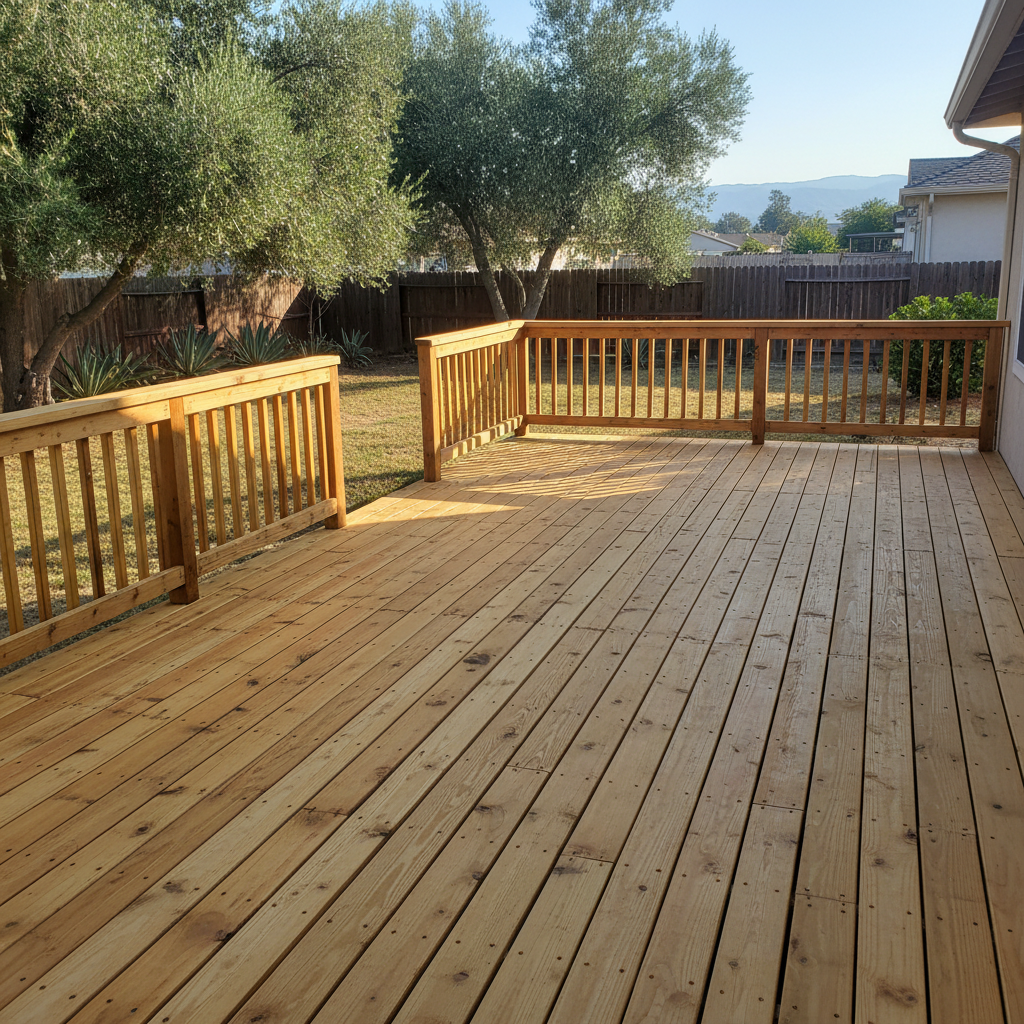
You invested good money in your deck, whether we built it for you or someone else did. It’s your outdoor living room, your BBQ spot, your quiet morning coffee place. So, how do you make sure it sticks around for the long haul, especially with our crazy Fresno weather?
Extend Your Deck's Life: It's Easier Than You Think
Look, a deck isn't a 'set it and forget it' kind of deal. You wouldn't buy a new car and never change the oil, right? Same goes for your deck. The biggest thing you can do to extend its life is pretty simple: keep it clean and protected.
- Clean it regularly: I'm talking about sweeping off leaves, dirt, and debris every week or two. That stuff holds moisture, and moisture is the enemy of wood. You'll be surprised how much grime builds up, especially if you've got trees dropping sap or pollen around.
- Wash it annually: A good wash once a year, usually in the spring after the last rain, makes a huge difference. Use a deck cleaner designed for your material – wood, composite, whatever you've got. A gentle power wash is fine, but don't go blasting it at full force; you can damage the wood fibers or composite surface. I've seen folks strip the finish right off their deck trying to get it 'extra clean.'
- Seal or stain it every few years: This is crucial for wood decks. Our sun here in the Central Valley is brutal. UV rays break down wood fibers, leading to graying, cracking, and rot. A good quality sealer or stain acts like sunscreen for your deck. Depending on the product and how much sun your deck gets, you're probably looking at reapplying every 2-4 years. If your deck is getting direct afternoon sun all summer long, you'll be on the shorter end of that spectrum.
- Trim back vegetation: Keep bushes, trees, and vines from growing directly onto or under your deck. They trap moisture and can even create pathways for pests like termites, which are definitely a concern around here, especially in older neighborhoods like Tower District with mature landscapes.
Regular Maintenance: Your Deck's Best Friend
Beyond the big annual tasks, there are little things you can do that add up. It's like checking your tires – small effort, big payoff.
- Inspect fasteners: Walk around your deck and check for any loose nails or screws. Our temperature swings can cause wood to expand and contract, sometimes working fasteners loose. Just tap them back in or tighten them up.
- Check for splintering: Especially on older wood decks, splinters happen. Sand down any rough spots to keep them from getting worse and to prevent injuries.
- Clear gaps between boards: Debris can get wedged in there, trapping moisture. Use a putty knife or a thin piece of wood to clear it out. Good drainage is key.
- Clean under the deck: Don't forget about what's underneath! Leaves, trash, and anything else that collects under there can create a damp, inviting environment for mold, mildew, and pests.
Warning Signs: When to Pay Closer Attention
Your deck will usually give you a heads-up before things get really bad. You just gotta know what to look for.
- Soft spots or spongy wood: If you step on a board and it feels soft or gives way a little, that's a major red flag for rot. Don't ignore it.
- Cracked or splitting boards: Small surface cracks are normal, but deep splits or boards that are visibly separating are a problem. They can compromise structural integrity and let more moisture in.
- Loose or wobbly railings: This is a safety issue, plain and simple. Railings should be rock solid. If they're not, you need to figure out why and fix it immediately.
- Mold or mildew growth: Green or black patches mean moisture is hanging around too long. While sometimes just a cleaning issue, it can also point to poor drainage or a lack of proper sealing.
- Rusting fasteners or hardware: If your nails, screws, or connecting hardware are rusting, it means they're constantly exposed to moisture. This weakens them and can stain your deck.
- Pest damage: Little holes, sawdust-like trails, or actual bugs can mean you've got termites or other wood-boring insects. This is serious and needs immediate attention.
When to Call a Professional: Don't DIY Everything
I'm all for homeowners tackling projects, but there are times when you really need to bring in the pros. Trying to fix something you're not equipped for can end up costing you more in the long run, or worse, create a safety hazard.
- Significant rot or structural damage: If you've got widespread rot, especially in support posts, joists, or ledger boards (the board attaching the deck to your house), that's not a DIY job. These are critical structural components.
- Wobbly or failing support posts: If the posts holding up your deck are leaning, cracked, or showing signs of rot at the base, call us. This is a collapse risk.
- Major railing issues: If multiple sections of your railing are loose or broken, or if the posts anchoring them are compromised, get help. Railings are there to keep people from falling.
- Pest infestations: As I mentioned, if you suspect termites or other serious wood-destroying insects, you'll need a pest control expert first, and then a deck repair specialist like Fresno Deck Builders to assess and fix the damage.
- Deck code compliance: If your deck is older and you're doing major repairs, it's a good idea to make sure it still meets current building codes. Codes change, and sometimes what was fine 20 years ago isn't up to snuff today. We stay up-to-date on all the local Fresno building requirements.
Taking care of your deck isn't rocket science, but it does take a little consistent effort. A well-maintained deck not only looks better but also lasts longer and stays safer for everyone who uses it. If you're ever unsure about a problem or just need a hand, give us a call. We're here to help keep your outdoor space looking great and standing strong.