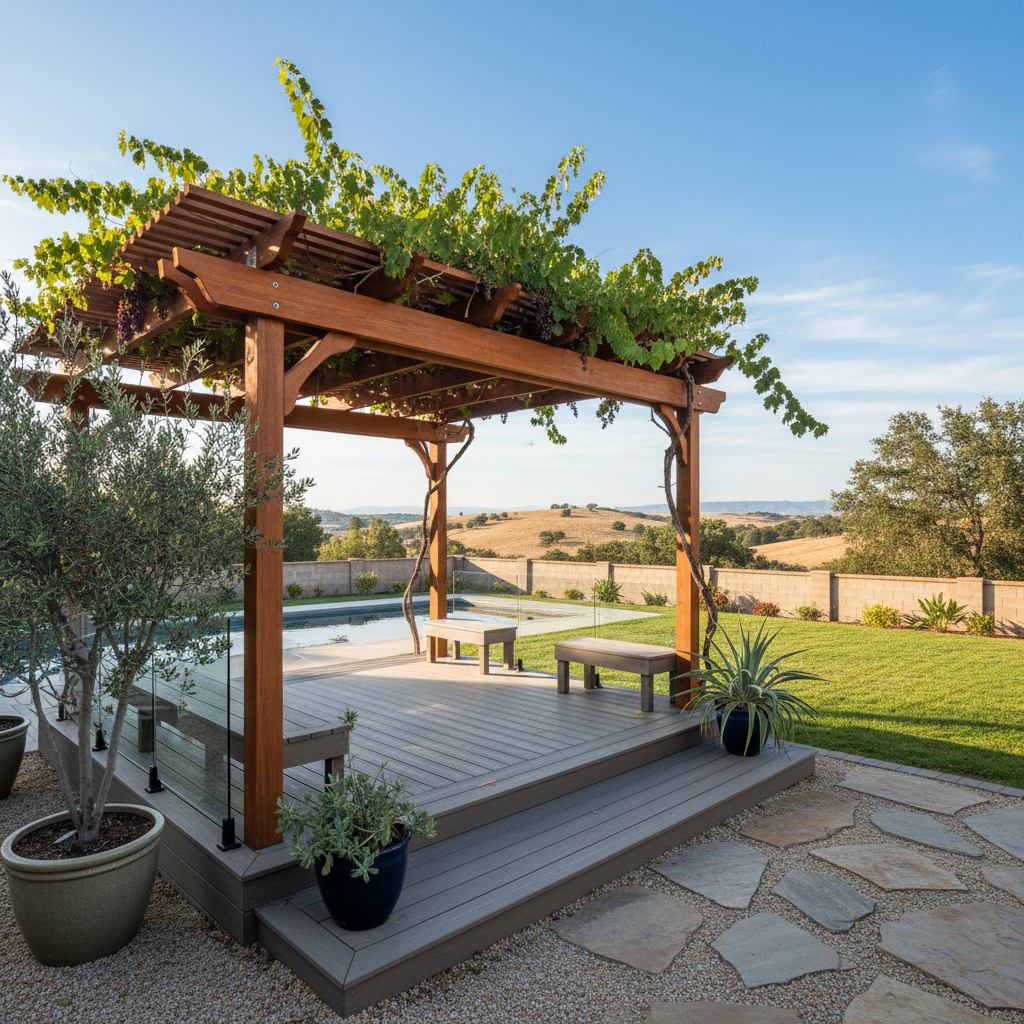
So, you're kicking around the idea of adding a pergola to your Fresno home. Smart move. They add a ton of shade, curb appeal, and really extend your outdoor living space. But here's the thing: when you build it matters, especially here in the Central Valley.
Best Times to Schedule Your Pergola Build
Look, I've been building decks and pergolas in Fresno for years, and I can tell you straight up, there are definitely better times than others to get this kind of work done. You'd think summer's the obvious choice, right? Clear skies, long days. But that's not always the whole story.
Fall (October-November): This is probably my top pick. The scorching summer heat has finally backed off, but we're usually still dry. The ground's not baked solid like it is in August, and it's not a muddy mess from winter rains. Plus, you get to enjoy your new shade structure for the holidays and the mild Fresno winter.
Early Spring (March-April): Another great window. The winter rains are typically winding down, and the temperatures are just about perfect for working outdoors. It's not too hot, not too cold. You beat the rush of people wanting work done in late spring and early summer, and your pergola will be ready to go well before the triple-digit heat hits.
Winter (December-February): This can be a good time if we're having a dry spell. Labor's often more available, and you might even catch a break on scheduling. The downside? If we get a typical El Niño year, you could be dealing with rain delays. Nobody wants to see their project stalled because of a week of downpours. We're talking about digging footings, pouring concrete – that stuff needs dry conditions to cure right.
What about summer? Honestly, I try to avoid major new builds in July and August if we can. Working in 105-degree heat isn't fun for anyone, and it can actually affect how materials behave. Wood expands and contracts like crazy, and finishes might not apply as smoothly. Plus, you're probably trying to use your yard, not have a construction crew in it.
Weather Conditions That Affect Pergola Construction
Our Fresno climate is pretty unique, and it definitely throws some curveballs at outdoor construction. You've got to consider a few things:
Extreme Heat: I mentioned this already, but it's worth repeating. When temperatures soar, it's not just about comfort. Concrete cures too fast, which can lead to cracking. Wood can warp or check more easily before it's fully installed and secured. We take precautions, like working early mornings, but it's still a factor.
Rain: This is a big one. You can't pour concrete footings in a muddy hole. You can't stain or seal wood in the rain. Even just a damp day can mess with finishes. We plan around forecasts, but sometimes those winter storms roll in unexpectedly. Delays happen, and it's always better to wait for dry conditions than to rush a job that won't last.
Wind: Believe it or not, wind can be an issue, especially for taller structures or when we're lifting long beams. It's a safety concern for my crew and for the materials. We don't often get hurricane-force winds here, but even a blustery day can slow things down.
We're talking about building something that's going to stand for decades. Cutting corners because of bad weather just isn't how Fresno Deck Builders operates. We'd rather take an extra day or two to make sure it's done right.
Protecting Your Pergola Investment Year-Round
Once your beautiful new pergola is up, you'll want to keep it looking great and standing strong. Our climate here in Fresno is tough on outdoor wood, whether it's a deck or a pergola. That intense sun and those big temperature swings really do a number on materials.
Regular Cleaning: Just like anything else outside, dust, pollen, and even bird droppings will accumulate. A simple wash with mild soap and water once or twice a year will go a long way. Use a soft brush, not a pressure washer that's set too high – you don't want to damage the wood fibers.
Staining and Sealing: This is probably the most crucial maintenance step for a wood pergola. The sun's UV rays are brutal here, especially in neighborhoods like Old Fig Garden where you see a lot of older, unshaded structures. A good quality stain and sealer will protect the wood from UV damage, moisture, and rot. Depending on the product and how much sun exposure your pergola gets, you'll probably need to reapply every 2-5 years. I always recommend checking it annually – look for fading, peeling, or water not beading up on the surface.
Check for Fastener Issues: Over time, with all that expansion and contraction, screws and bolts can loosen up. Give your pergola a once-over every year or so. Tighten any loose fasteners. If you see any signs of rust or corrosion, replace them. It's a small thing that can prevent bigger problems down the road.
Inspect for Damage: Look for cracks, splinters, or any signs of insect activity. Catching these things early makes repairs much easier and cheaper. Termites are always a concern in our area, so keep an eye out for any suspicious tunnels or wood damage.
A pergola isn't just an expense; it's an investment in your home and your lifestyle. Taking a little time for maintenance will ensure you get decades of enjoyment out out of it. If you've got questions about timing or maintenance, give us a call. We're always happy to talk shop.