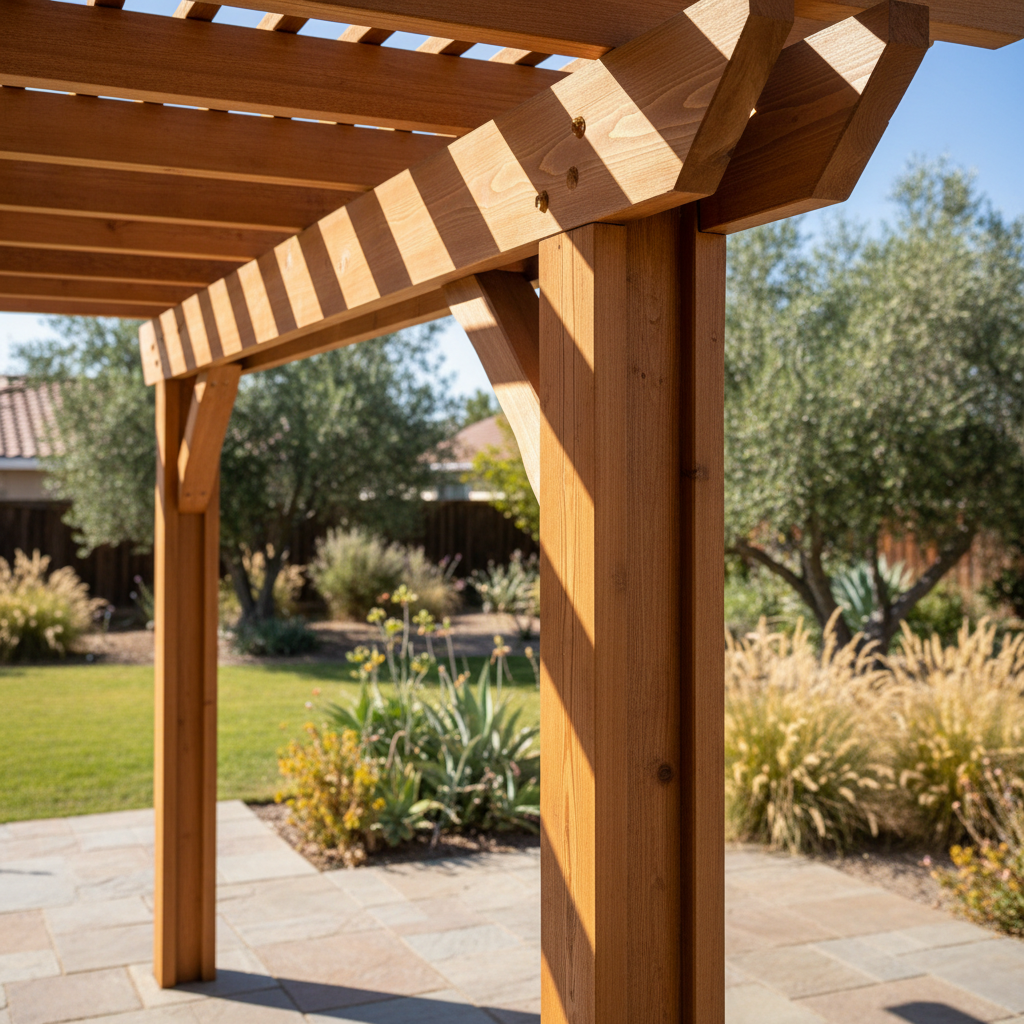
So, you're thinking about a pergola for your backyard here in Fresno. Smart move. They add a ton of character and some much-needed shade, especially with our summers. I get a lot of questions about these structures, and honestly, there's a lot of misinformation out there. So, I figured I'd tackle the most common ones I hear, straight from my experience building 'em right here in the Central Valley.
What's the real difference between a pergola and a patio cover?
This is probably the most common question I get. Folks often use the terms interchangeably, but they're not the same thing at all. A patio cover, or a solid roof structure, is built to give you full protection from sun and rain. It usually has a solid roof, maybe shingled like your house, or made of insulated panels. The whole point is to keep everything underneath dry and shaded.
A pergola, on the other hand, is all about partial shade and defining a space. It has an open, slatted roof, sometimes with fabric canopies or vines growing over it. You're still going to get some sun and definitely some rain through it. It's more about creating a certain look, a semi-enclosed outdoor room, and breaking up the harsh direct sunlight rather than blocking it completely. Think of it as a beautiful architectural feature that offers a softer kind of shade and a perfect spot to hang some string lights or a fan.
Do I need a permit to build a pergola in Fresno?
Yes, you absolutely do, most of the time. This isn't something you want to skip. The City of Fresno, just like most cities, has rules for detached structures. Generally, if your pergola is bigger than 120 square feet, or if it's attached to your house, you're going to need a building permit. Even if it's smaller and freestanding, it's always smart to check with the Fresno Planning and Development Department. You really don't want to build something only to find out later you have to tear it down or pay hefty fines. We always handle the permitting process for our clients at Fresno Deck Builders, because, let's face it, it can be a headache if you don't know the ropes.
What materials are best for a Fresno pergola?
Given our intense Fresno sun and occasional heavy rains, choosing the right material is super important for how long it'll last. I usually recommend either pressure-treated lumber, cedar, redwood, or aluminum. Each one has its good points and bad points.
- Pressure-Treated Lumber: It's affordable and resists rot and insects pretty well. You'll need to stain or paint it regularly to keep it looking good and protected from UV.
- Cedar or Redwood: These are naturally resistant to rot and insects and look beautiful. They're more expensive upfront but can last a long time with proper sealing and maintenance. They weather to a nice gray if you let them.
- Aluminum: This is a low-maintenance option. It won't rot, warp, or get eaten by termites. It's usually powder-coated, so it holds its color well. It can sometimes feel a bit less 'natural' than wood, but for durability and how easy it is to care for, it's tough to beat.
I'd steer clear of untreated pine unless you're prepared for a lot of upkeep and a shorter lifespan, especially with our dry heat causing wood to crack and split if not properly cared for.
How much shade will a pergola actually provide?
That really depends on the design. A traditional pergola with widely spaced rafters and purlins (those smaller beams running across the rafters) might only give you 40-60% shade, depending on the time of day and the sun's angle. If you want more shade, we can design it with closer spacing between the purlins, or even add a second layer of purlins running perpendicular to the first. Another popular option is to add a retractable fabric canopy or even some shade sails. For a really effective shade solution, especially during those 100-degree days we get in July and August, you might consider growing vines like wisteria or grapevines over it. They look beautiful and provide fantastic natural shade.
Can I attach a pergola to my house, or does it have to be freestanding?
You can absolutely do both! An attached pergola often makes sense if you want to extend your living space directly off your back door or patio. It uses the house wall for support, which can sometimes simplify the construction a bit and make it feel more integrated. However, attaching it means you'll definitely need a permit, and you need to make sure the attachment points are properly flashed and sealed to prevent any water from getting into your home's structure. A freestanding pergola offers more flexibility in terms of where you put it in your yard. Maybe you want it over an outdoor kitchen area, or by the pool, or just as a focal point in your garden. Both options are great, it just depends on what you need and how your yard is laid out.
What kind of foundation does a pergola need?
This is important for stability, especially with our clay soils here in Fresno that can expand and contract. Generally, pergola posts need to be anchored securely. For most pergolas, we'll dig post holes, set the posts in concrete footings, and make sure they go deep enough to be stable. The depth usually depends on the size and height of the pergola, but typically we're looking at 24-30 inches deep, sometimes more. We want to make sure those posts aren't going anywhere, even in a strong wind. If it's a very large or heavy structure, or if we're dealing with particularly challenging soil conditions, we might use larger or deeper footings. You don't want your beautiful new pergola leaning after a few years because the foundation wasn't done right.